





In August 2026, Rigaku established an effectively zero Scope 1 and Scope 2* operational framework at its Yamanashi Plant, as part of its commitment to a sustainable society.
The Yamanashi Plant is a key production site that accounts for approximately 15% of the Company’s total Scope 1 and Scope 2 emissions. This initiative represents one of the Company’s key measures toward achieving its greenhouse gas reduction target of reducing Scope 1 and Scope 2 CO₂ emissions by 50% by 2030 compared to the base year (2021). It also demonstrates Rigaku’s commitment to responsible manufacturing.
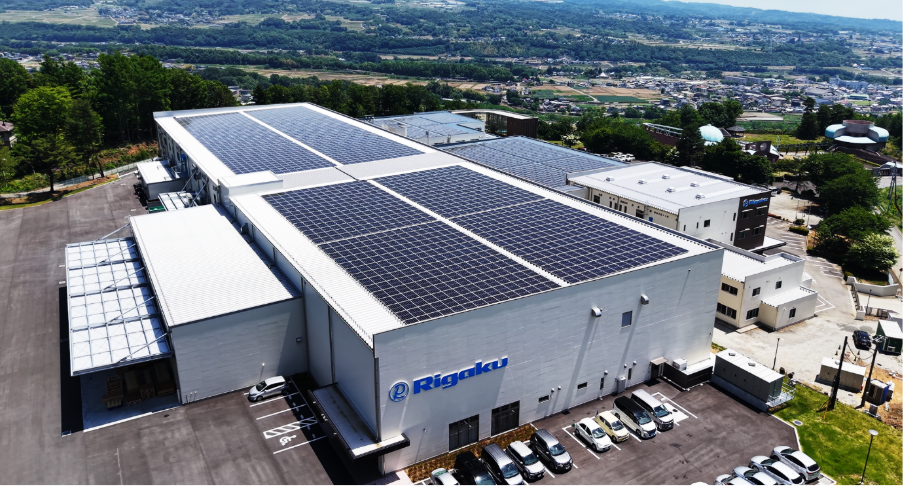
Initiatives Toward Sustainable Plant Operations
The Yamanashi Plant has continuously implemented a range of measures to reduce Scope 1 and Scope 2 emissions.
In addition to reducing energy consumption through equipment upgrades and operational improvements, the plant has increased its use of renewable energy. These efforts reduced reliance on fossil fuels and enabled the establishment of an operational framework for effectively zero Scope 1 and Scope 2 emissions.
Key Measures Supporting Effectively Zero Scope 1 and Scope 2 Emissions
Key initiatives include:
• Introduction of an Onsite Power Purchase Agreement (PPA)
Solar power generation facilities have been installed at the Yamanashi Plant under an onsite PPA arrangement, enabling the use of renewable electricity generated on-site.
• Transition to a Clean Electricity Plan
The plant switched its purchased electricity to a renewable energy-based electricity plan supported by non-fossil fuel certificates, making CO₂ emissions associated with purchased electricity effectively zero. Combined with the onsite PPA described above, this initiative has further reduced emissions from electricity consumption.
• Elimination of Gas-Powered Forklifts
The use of gas-powered forklifts at the Yamanashi Plant ended upon the expiration of the lease agreements at the end of July 2026. All forklifts at the plant are now electric, eliminating emissions associated with the direct combustion of fossil fuels.
• Adoption of Carbon-Offset LPG
Because immediate reduction of emissions associated with gas consumption in the employee cafeteria was not feasible, the plant switched to carbon-offset LPG supported by J-Credits.
Through the combination of these initiatives, the Yamanashi Plant established an operational framework that enables effectively zero Scope 1 and Scope 2 emissions beginning in August 2026.
This initiative marks a significant milestone in advancing Rigaku’s sustainability strategy. Rigaku will continue advancing initiatives to contribute to a sustainable society and reducing environmental impacts across its operations.
Notes
・Scope 1: Direct greenhouse gas (GHG) emissions from sources owned or controlled by the Company, including fuel combustion.
・Scope 2: Indirect GHG emissions associated with the consumption of purchased electricity, heat, and other forms of energy.
・Power Purchase Agreement (PPA): A long-term contract under which a power producer supplies electricity to an end user. Under an onsite PPA, power generation facilities are installed on the customer’s premises, and the electricity generated is consumed on-site.
・For this release, “Yamanashi Plant” refers to the Yamanashi Plant of Rigaku Corporation, and the scope of this initiative covers the Scope 1 and Scope 2 emissions associated with facilities and equipment managed by the plant. Emissions from company-owned and business-use vehicles managed by other Group companies or other business sites of Rigaku Corporation are excluded. This organizational boundary is consistent with the methodology used for the Company’s third-party assured Scope 1 and Scope 2 emissions data.
・The effectively zero Scope 1 and Scope 2 emissions described in this release are based on the Company’s own calculations and are not included within the scope of third-party assurance (which covers Scope 1 and Scope 2 emissions for the period from January to December 2025).