

Asbestos is a natural mineral found in six types: actinolite, amosite, anthophyllite, chrysotile, crocidolite, and tremolite. Among them, chrysotile accounts for over 90% of asbestos used in the world. Asbestos’s low cost and excellent heat/fire/corrosion resistance and sound insulation are the properties that contributed to its widespread use as a spray-on coating, or as roofing or interior/exterior decoration material.
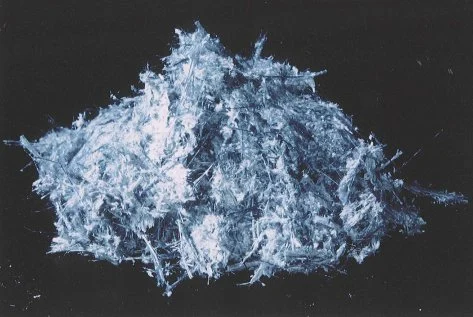

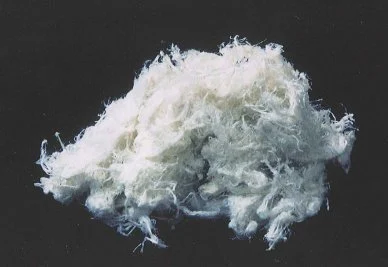
(Pictures provided by JATI Association.)
However, it has been found that degraded and scattered asbestos powder can cause health damage, including pulmonary fibrosis, malignant mesothelioma, and lung cancer by inhalation. So, its production, import, and usage were prohibited in Japan in 2006. Then the Amended Air Pollution Control Act mandated that all buildings demolished or renovated must undergo an investigation by asbestos surveyors, starting from October 2023 in Japan. The usage of materials, spray-on coatings, and humectants with asbestos content exceeding 0.1% is prohibited. Polarized light microscopy, phase-contrast microscopy, and X-ray diffraction analysis are used to investigate them.
Renovation rush!
There was a construction boom in the 1970s and 1980s during the Japanese economy’s high-growth period. Many of these buildings are coming to the end of their useful life. During demolition or renovation of these buildings, there is a serious risk of exposure to workers from scattered asbestos.
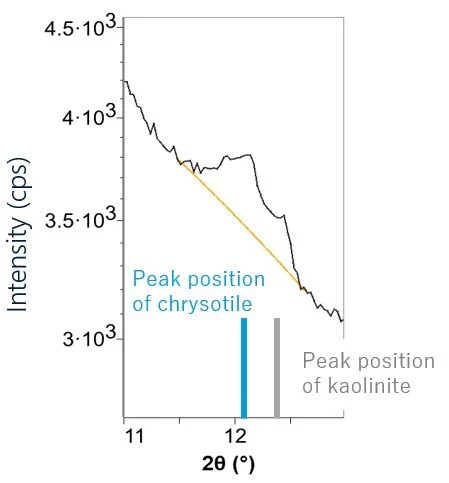
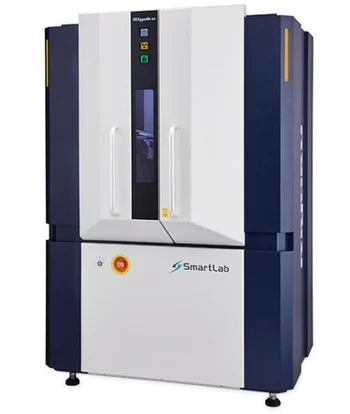
The fully automated multipurpose X-ray diffraction system SmartLab SE can detect low asbestos content at around 0.1mass% without special sample preparation. Rigaku is proud to contribute to the investigation of asbestos in building materials to help build a healthier society.
Click here for details of SmartLab SE