

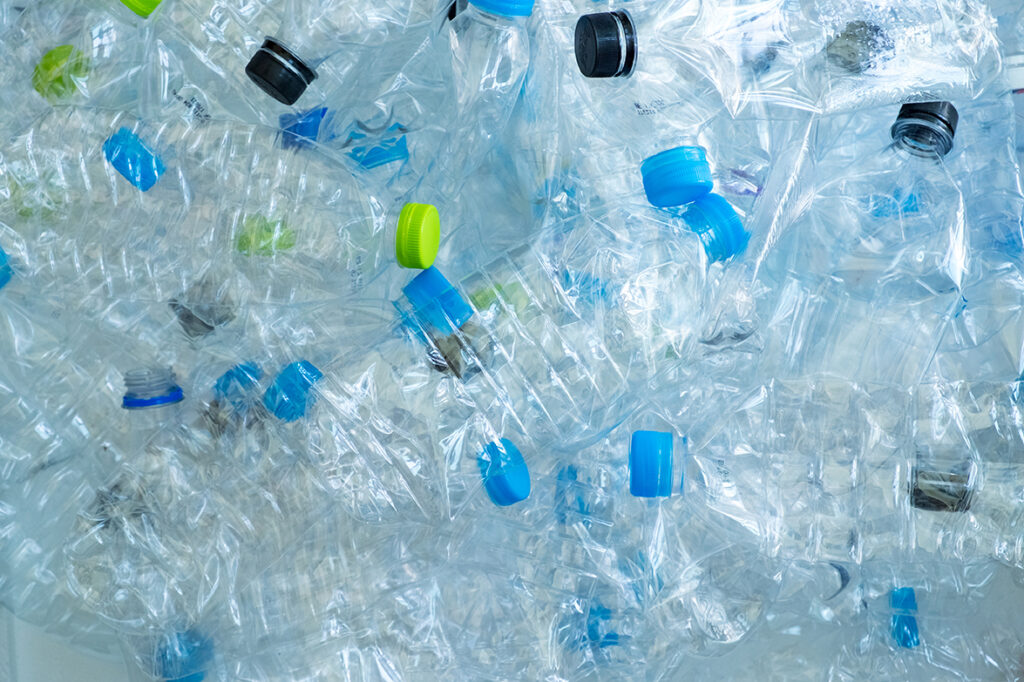
Waste plastics present a growing problem for the environment leading many businesses to make high-profile decisions to move away from single use plastics towards more sustainable solutions. While this can mitigate the problem for the future, the vast quantities of plastics discarded in the past remain a problem to be dealt with. Polyethylene terephthalate, better known as PET, is one such plastic, widely used in plastic water bottles and other containers. Luckily, some ingenious researchers have found a use for PET which not only could have an impact on treating PET waste, but also conveniently addresses another enormously important environmental problem: CO2 capture. The researchers, from the University of Copenhagen, realised that PET plastics can be upcycled into solid materials capable of capturing carbon dioxide, reducing atmospheric levels. Rather than viewing discarded plastic only as a disposal problem, the work reframes it as a feedstock for functional materials with environmental value. The resulting compounds showed carbon dioxide capture capacities of up to 3.4 mol kg-1, with strong selectivity under humid conditions relevant to real-world gas streams.
To show how the upcycled material was formed and why it behaved as it did, the team used three-dimensional electron diffraction (3D ED/MicroED). This structural information was critical in understanding the structure of the solid-phase product which was too small for conventional analysis with X-rays.
With our environment sustaining attacks from multiple man-made sources, elegant solutions which address two at once are particularly welcome.
Click here for details of XtaLAB Synergy-ED
Source: Margarita Poderyte et al., Repurposing polyethylene terephthalate plastic waste to capture carbon dioxide.Sci. Adv.11,eadv5906(2025).DOI:10.1126/sciadv.adv5906